Late-Arriving Usage Events and the Cutoff Problem in Billing Reconciliation
Late events silently cost SaaS companies thousands in lost revenue and billing disputes every month.
Usage-based billing has stopped being a niche pricing experiment and become the default architecture for how software gets sold. Sixty-three percent of SaaS businesses now offer metered or usage-based billing options, and among AI-selling companies specifically, G2's study of 108 firms found 73% run a usage-based component alongside their subscription tiers. That shift looks like a pricing decision from the outside. From inside the pipeline, it's an infrastructure problem, and the hardest part of that problem is deciding what "on time" even means for an event that was generated somewhere else, by something else, possibly hours ago.
Why usage events arrive late in distributed systems
Every metered event carries three timestamps, and they are never the same value. There's the effective boundary, which is when the emitting service actually recorded the event happening at the source. There's the collection boundary, which is when the metering pipeline accepts it. And there's the billing boundary, the period the event ultimately gets counted toward. MVP Factory's guidance on this point is blunt: bill on the effective timestamp, never the ingestion timestamp, because the two diverge constantly and silently. Most usage-based billing errors don't announce themselves. They just quietly miscount.
The divergence has ordinary, boring causes. Network retries and client-side retries mean a service can emit a duplicate or a delayed copy of an event that already fired once. Message brokers like Kafka redeliver a message if a consumer crashes mid-processing, so the same event appears again, later, looking new. A single agent call can chain across multiple LLM invocations and downstream services, and each of those services may log its own usage event minutes or hours after the original call started, which compounds the problem in agentic workflows. Add mobile and edge clients that go offline and batch-submit everything once they reconnect, and you've got events arriving in whatever order the network felt like delivering them. Timezone handling adds a second layer of confusion on top of pure delay, since customers in different regions can watch the same event land on different sides of a billing boundary depending on which clock the system trusted.
The same retry mechanism that causes late arrival is the mechanism that causes duplicates. A retried event is both late and potentially a copy of something already ingested. That means deduplication and late-event handling aren't two separate engineering problems that happen to live in the same codebase; they're the same problem viewed from two angles. MVP Factory identifies this as a particularly difficult infrastructure problem, precisely because events are distributed across services while the billing cycle enforces a hard, unforgiving cutoff. A team that doesn't design for late arrival on purpose will discover the gap the worst possible way: retroactively, at month-end, while an invoice is being finalized and a customer is already looking at it.
The four failure categories from poorly handled late events and their costs
Poorly handled cutoffs fail in a small number of predictable ways. Duplicate events get counted as new usage and inflate a bill. Malformed or misrouted events can cause usage to land on the wrong account entirely. Late-arriving events force a closed period back open for manual recalculation, which is exactly the kind of work no finance team wants to do twice. Aggregation window mismatches can produce count anomalies right at month boundaries, artifacts that look like bugs but are really a timing policy problem. Timezone mismatch belongs on this list too: customers in different regions can watch identical usage patterns produce different billing dates, for no reason they can see.
Beyond that canonical set, there are failure patterns that occur in practice and rarely get discussed in vendor documentation. Backfill bugs can reprocess a period and double-charge it. A pricing configuration rollback, pushed after a deployment, can quietly apply the wrong tariff to a batch of events. Configuration drift between staging and production means the pricing logic tested in one environment isn't the pricing logic running in the other.
The human cost is the underlying driver of all of it, because silent errors accumulate unseen until someone has to absorb the fallout. Without automated reconciliation, these errors are silent by nature. Teams don't discover they've been under-counting usage until someone runs a reconciliation job, and by then several billing periods may already be closed. The underlying point holds regardless of who makes it: the absence of an alarm is not the same as the absence of a problem.
The dollar figure attached to this isn't hypothetical. HappyRobot, an AI-agent company, recovered $72,500 in unbilled overages within the first 30 days of layering a reconciliation process on top of its existing metering, LedgerUp reports. That's revenue that existed, was earned, and simply never made it onto an invoice because nothing was watching for the gap, not a rounding error. That's revenue that existed, was earned, and simply never made it onto an invoice because nothing was watching for the gap.
Then there's the cost that never appears in a recovery number at all. Bill shock and billing disputes are the customer-facing symptom of the same underlying failure, and they carry a cost that has nothing to do with the dollar amount of the error itself. A customer who gets an unexplained charge doesn't file a calm support ticket. They lose confidence in the meter, and once that happens, every future invoice gets scrutinized instead of trusted.
The grace window as a first-class policy decision, not a default setting
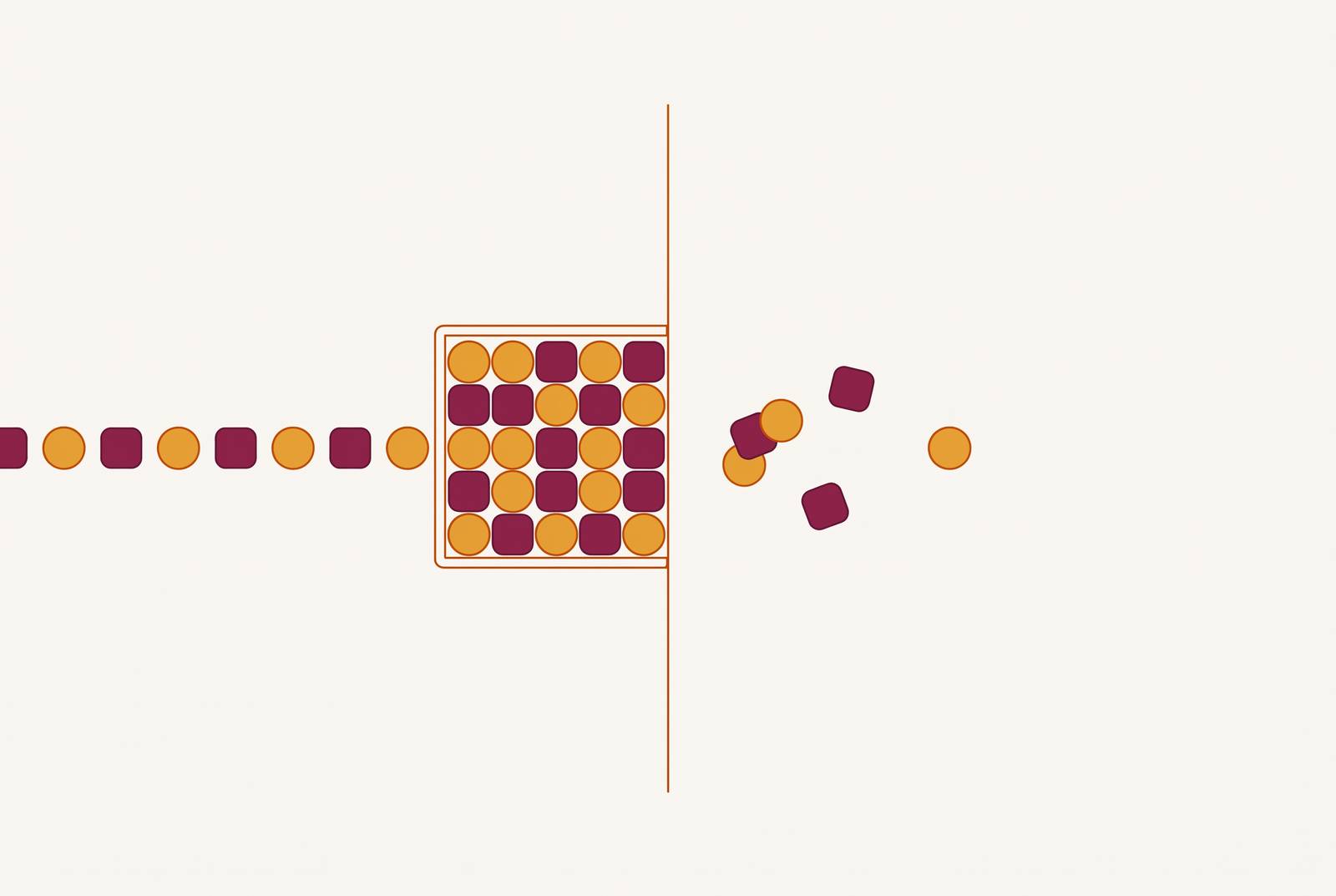
Billing strictly on effective timestamp solves one problem and immediately exposes another. If a period closes the instant its effective window ends, every event that was legitimately generated inside that window but arrives ten minutes late gets orphaned. MVP Factory's answer is a defined grace window, typically somewhere between 24 and 72 hours, during which the system keeps accepting events tagged to a period even after that period's boundary has technically passed.
The mechanics matter here, not just the concept. An event arriving inside the grace window gets accepted and counted in the period its effective timestamp says it belongs to. An event arriving after the window closes gets bucketed into the next billing period, or gets flagged for someone to look at by hand. A common operational heuristic is a consistent cutoff of three to five days after month-end, paired with a policy that's communicated to customers clearly enough that a late-bucketed charge doesn't turn into a dispute.
None of that works if it only exists in a policy document. MVP Factory's pseudocode pattern for this is instructive: a function like isWithinBillingPeriod checks the event's effective timestamp and confirms that the current moment (Instant.now()) falls before the period's end plus the grace window. That check has to live in code, enforced at ingestion, because a grace window that exists only in a wiki page is aspirational at best. One engineer's late-Friday hotfix, shipped without knowing the policy exists, can silently violate it.
Putting this in the terms of service isn't a legal afterthought, either. Customers who notice a charge landing in an unexpected billing period are, in practice, the earliest detection system a company has. MVP Factory makes this point directly: those customers will catch a billing bug before the engineering team's own monitoring does, simply because they're the ones staring at the invoice line by line. The broader point about platform flexibility follows naturally from this: billing infrastructure needs configurable cutoff policies that can roll late usage into the next cycle without breaking the audit trail that finance and compliance depend on.
Idempotent ingestion and the event schema decisions that determine whether late events can be trusted
None of the grace-window logic means anything if the event itself can't be trusted, and that trust gets built or broken at the schema level. A usage event needs a timestamp representing when it happened at the source, not when it showed up at the door. That distinction is non-negotiable for cutoff accuracy; conflate the two and every downstream policy decision is built on a false premise. It needs a customer_id or subscription_id that reliably links it to a billing entity, because a dropped or malformed identifier here doesn't fail loudly, it just quietly attributes usage to a default account or the wrong one entirely. It needs an idempotency_key, separate from any event_id, so a duplicate can be recognized and discarded independent of whatever ID the source system assigned. And it needs a properties object carrying the dimension data (endpoint, region, model, feature) that multi-dimensional pricing depends on.
Idempotency has to be enforced at the ingestion edge, not somewhere downstream in aggregation logic. That means checking for an existing event_id before the write happens, using something like a Redis SET for a fast existence check, or a primary-key deduplication approach against a write-optimized store such as Cassandra or ScyllaDB. Reject duplicates after they've already landed in a rollup table and the damage is already done: the corrupted aggregate has to be found and unwound, which is a much harder problem than refusing the write in the first place.
Schema validation belongs in this same bucket, because it's a late-event control as much as a data-quality control. A malformed event that gets rejected immediately can be fixed and re-emitted by the source, and as long as that happens inside the grace window, nothing is lost. A malformed event that slips through validation and fails somewhere later, deep in aggregation, is much harder to trace back and correct before the period closes. Deduplication logic needs to be built into the ingestion layer from day one, because retrofitting it onto a pipeline that's already live and already billing customers is one of the most painful migrations a team will ever run, as MVP Factory warns.
Raw event storage vs. pre-aggregation: why the choice determines whether billing errors are recoverable
The storage decision makes a billing mistake either a fixable bug or a permanent loss. MVP Factory lays out the tradeoff cleanly across three approaches. Raw event storage offers exact billing accuracy and the ability to fully replay history if something needs correcting, at the cost of higher read overhead at query time. Pre-aggregation, rolling events up into buckets as they arrive, makes reads cheaper but yields accuracy that is approximate and lossy, with no way to reprocess once the rollup has happened. A hybrid approach, raw storage paired with rollups built on top, aims to capture exact accuracy and replay capability while keeping reads fast.
For most SaaS workloads under a substantial daily volume of events, the hybrid answer is the correct one: store immutable raw events in a columnar store, a workload for which MVP Factory identifies ClickHouse as a strong fit, then run scheduled aggregation jobs that populate rollup tables for fast reads. The irreversibility argument is what makes this decision matter so much more than it looks like it should. The moment raw events get discarded to save on storage costs, the ability to reprocess disappears along with them. If a bug in the aggregation logic gets discovered three weeks later, a team with raw storage can replay the affected window and fix it. A team without raw storage has turned a fixable engineering mistake into a permanent hole in revenue, because the source data that would let them correct it no longer exists.
This connects directly back to the issue of late events arriving after their aggregation rollup has already closed. If a late event arrives after its aggregation rollup has already closed, a system with only pre-aggregated data has no path to correct that rollup retroactively. A system that kept the raw event log can replay the late arrival into its correct period, even after the fact. Pre-aggregation is a read optimization. It was never meant to be a storage strategy, and treating it as one is how a recoverable mistake becomes an unrecoverable one.
Streaming, batch, and hybrid ingestion patterns and their breaking points under late-event load
Ingestion architecture comes in three flavors, and each one has a different failure mode once late events enter the picture. Batch aggregation suits low-throughput, monthly billing cycles and is simpler to audit, but it creates wide aggregation windows, and a late event that misses one of those windows entirely just doesn't get counted unless someone manually reruns the batch. Streaming, real-time ingestion suits high-volume events and near-real-time billing, but it demands stateful processing and exactly-once semantics, a guarantee that becomes increasingly difficult to hold onto once event arrival stops being predictable.
Hybrid ingestion, combining a streaming path with a batch reconciliation pass, is the pattern best suited to absorb late arrivals, because the batch pass gets a second chance at anything the streaming pass missed. The streaming side gives customers real-time visibility into their spend and can drive usage-based rate limits in the moment. The batch side, run at period close, sweeps up anything that arrived within the grace window after the streaming pass already moved on. This is effectively a hot-path, cold-path split: sub-second latency for dashboards and live usage alerts, batch-accurate processing for the number that actually ends up on an invoice.
Each pattern still has a specific breaking point. Batch pipelines drop or require a manual rerun for anything arriving after the window closes. Pure streaming pipelines run into windowing logic that has to explicitly account for out-of-order events, or the aggregation comes out wrong, and maintaining exactly-once semantics under unpredictable arrival gets expensive fast. Hybrid pipelines fix most of this, but only under one condition: the reconciliation pass can only catch what the earlier passes missed if the raw event log underneath it is immutable and replayable. Take that away, and hybrid degrades into batch with extra steps.
Retrospective adjustment after invoice finalization: credit notes, voids, and the accounting trail
Even a carefully designed grace window and a properly built hybrid pipeline cannot guarantee that every single event lands before an invoice gets finalized. Some fraction of usage will always arrive after the door has closed, because of causes like an unusually long network partition, an edge client that stayed offline longer than expected, or a downstream service in an agentic chain that took hours instead of minutes to log its portion of the work. At that point, the problem is no longer an ingestion problem but an accounting problem, because the delay has outlasted the pipeline's ability to correct it before the books close.
Handling this correctly means the adjustment has to happen through a credit note, a void, or a supplemental charge tied explicitly back to the original invoice, not through a silent edit to a number that's already been sent to a customer and possibly already reconciled against their own internal records. The accounting trail matters as much as the correction itself: a finance team, an auditor, or a customer's own accounts-payable process needs to see not just that a number changed, but why it changed and which original event triggered the change. A correction that isn't traceable back to its cause isn't really a correction, it's just a new number that happens to be more accurate, and it invites the very dispute the grace window was designed to prevent in the first place.