Deferred Revenue Reconciliation for Annual Prepay SaaS Contracts
Balancing deferred revenue to contracts requires architecture, not just spreadsheet discipline.
Deferred revenue reconciliation confirms that the liability on a SaaS company's balance sheet, cash collected for service not yet delivered, actually matches what every active contract says it should be. With a handful of customers, this takes an afternoon in a spreadsheet. Past a few hundred contracts, with modifications, renewals, and usage-based pricing stacked on top, it turns into one of the hardest recurring problems in SaaS accounting. Most finance teams treat this as a spreadsheet-discipline problem, and that's exactly where they go wrong. It's an architecture problem, and no amount of careful formula-writing fixes an architecture that can't track a contract change the day it happens.
Start with the definition, because it's the foundation everything else rests on. Under ASC 606 and IFRS 15, cash collected before a service is delivered is not revenue. It's a liability, deferred revenue, because the company still owes the customer something: twelve months of software access, support, whatever the contract promises. Until that obligation gets worked off, the cash sits on the balance sheet as a debt the company owes in service rather than dollars.
This produces a dynamic that trips up people outside finance constantly. A SaaS company signing more annual prepay deals sees its deferred revenue balance climb, not shrink. To someone reading the balance sheet without context, a growing liability looks like a growing problem. Here it's the opposite: it's evidence of strong forward bookings, cash already in the door for work still to be done. The confusion is understandable, but the number is a health signal, not a warning sign.
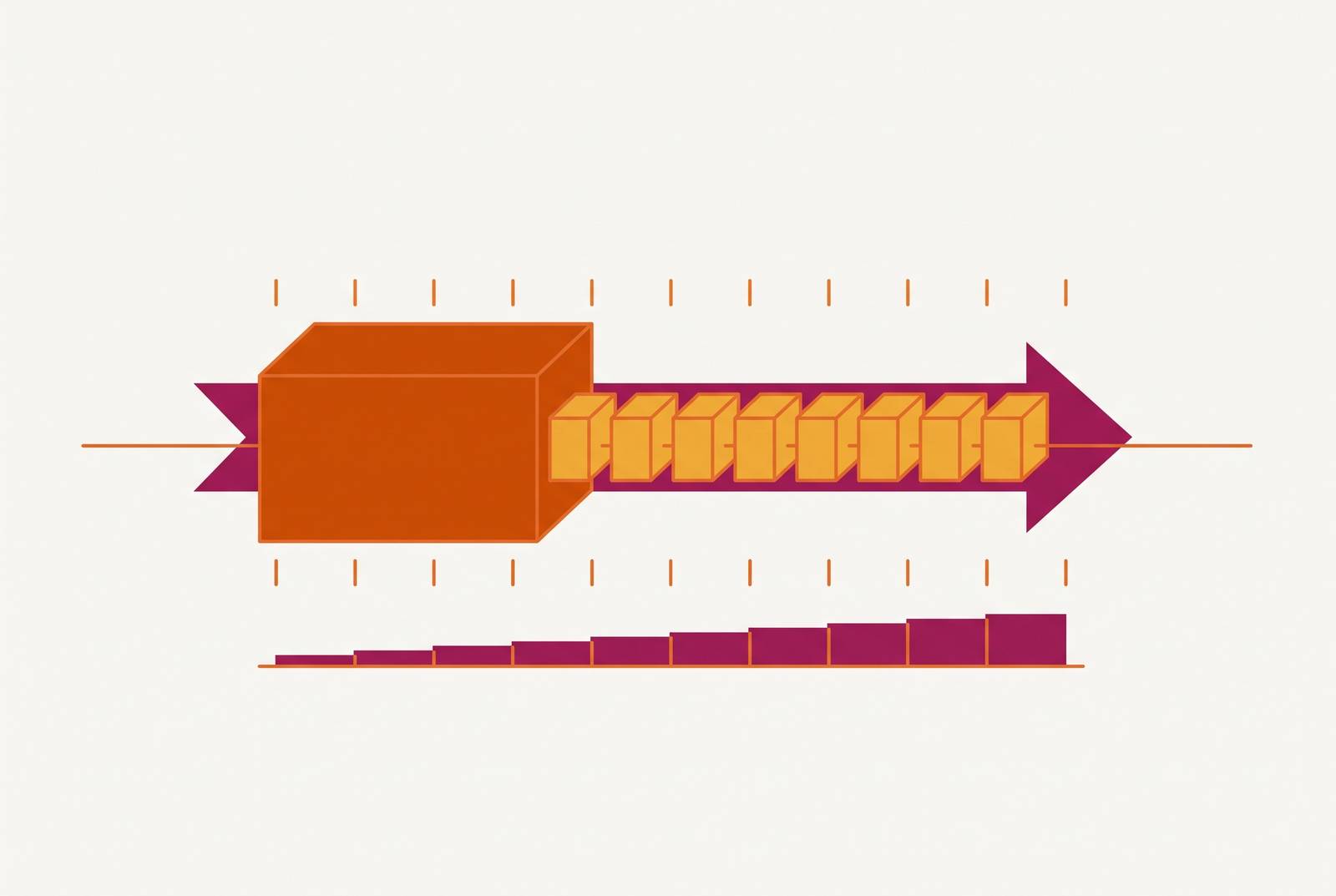
The mechanics run in a fixed sequence. Day one, a customer pays $120,000 for an annual contract: cash gets debited, deferred revenue gets credited, the full amount. Each month after that, one-twelfth of the contract value, $10,000, moves from deferred revenue into recognized revenue on the P&L. By month twelve, the deferred balance for that contract hits zero and the full $120,000 has moved through as earned revenue. Until each of those monthly slices is earned, the obligation is real: if the customer cancels in month four, the remaining eight months of cash are owed back, not the company's to keep. That refund exposure is exactly why the liability gets booked in the first place.
What a clean reconciliation actually requires at the contract level
Reconciliation, at its simplest, means confirming that the deferred revenue number on the balance sheet equals the sum of unearned obligations across every active contract. Not close. Equal. That means checking five things at every period close.
Every active contract needs to show up in the balance somewhere. Recognition schedules need to reflect the contract terms as they stand today, not the terms signed a year ago before a seat count or a price changed. Any contract that churned or got cancelled during the period needs to carry zero residual deferred balance afterward. Mid-period modifications need corrected schedules, not schedules still running on the old math. And multi-year contracts need their deferred revenue split correctly between current (due within twelve months) and non-current (due after that), shown separately on the balance sheet.
That current versus non-current split matters more than it sounds like it should. A three-year contract has obligations stretching well past the next fiscal year, and lumping all of it into current liabilities misstates the balance sheet just as badly as missing a churned contract does.
Invoicing frequency and revenue recognition are not the same schedule, and reconciliation has to hold both without letting them blur together. A $120,000 annual contract billed quarterly recognizes revenue on exactly the same monthly ratable basis as one billed all at once upfront. But the deferred revenue balance for the quarterly-billed contract rises and falls in quarterly steps, since it only ever holds the cash actually collected so far, while the annually-billed contract shows one big drop at signing and a steady decline after. Both patterns land at the same fully-earned total by year-end, and a reconciliation process that can't explain why two economically identical contracts show different balance-sheet curves will eventually miss a real error underneath the noise.
None of this works without a paper trail. Clean reconciliation needs an audit trail linking every deferred revenue entry back to a specific contract, a specific invoice, and a specific recognition schedule. A spreadsheet total with no drill-down path is just a number. It's a guess with a formula behind it.
How multi-year and unbilled contracts complicate the balance sheet
Multi-year deals introduce a failure mode that catches finance teams off guard even when the monthly mechanics are otherwise solid. Take a standard three-year annual-invoice contract: year one gets billed and paid up front, years two and three are contractually committed but not yet invoiced.
The mistake, and it's a common one according to SaaS Capital's coverage of the issue, is grossing up the balance sheet for the full three-year contract value, recording the unbilled future years in both unbilled accounts receivable and deferred revenue. That inflates both sides of the balance sheet with amounts that haven't actually been billed yet, overstating the company's obligations and its assets at the same time.
The correct treatment only puts the invoiced portion into deferred revenue. Years two and three get tracked internally, so the company knows what's coming, but they don't get grossed up onto the external balance sheet until they're actually invoiced. Where unbilled receivables for future years do get recognized, net them against the corresponding deferred revenue rather than showing them gross, so an auditor or investor looking at the balance sheet sees the real net obligation instead of an inflated pair of numbers that cancel out.
There's a separate question buried in here about financing components. If a prepayment is unusually large relative to the gap between payment and delivery, ASC 606 requires an assessment of whether the arrangement contains a significant financing component, since a customer paying three years upfront is effectively lending the company money. In practice, most standard three-year SaaS deals don't trigger this. But the assessment still has to happen and get documented, not skipped because the answer is usually no.
None of this is a one-time setup problem either. A company running dozens of multi-year contracts, each at a different point in its billing cycle, turns this netting calculation into a recurring task that shows up at every close, not something configured once and left alone.
The four contract events that break a reconciliation schedule mid-period
Contract modifications are the single biggest source of reconciliation failure once volume climbs. Every mid-term change, a seat addition, a price change, a tier upgrade, needs an accounting judgment before the recognition schedule can be safely updated, and that judgment gets skipped far more often than it should.
ASC 606 splits modifications into two treatments with very different consequences. If a customer adds a module priced at its standalone selling price, that's a new, separate contract: the original deferred revenue schedule keeps running untouched, and the new obligation gets its own schedule alongside it. But a price change, a tier change, or a seat reduction on the existing agreement is a modification of the existing contract, and depending on whether the remaining goods or services are distinct from what's already been delivered, it calls for either a prospective adjustment going forward or a catch-up adjustment against the existing deferred balance.
Seat additions mid-period are a common trigger for this. The old schedule can't just keep running as though nothing changed; the remaining deferred balance has to be recalculated and the forward schedule adjusted from the date of the modification, not from the original contract start.
Proration is a quieter version of the same problem. A contract that starts March 15 does not earn a full month of March revenue, it earns roughly half. Skipping daily proration doesn't cause one bad month. It compounds: the schedule stays misaligned for the life of the contract until someone catches it.
Cancellations and churns need immediate cleanup, clearing any residual deferred balance rather than letting it sit stale on the books; if a refund is owed, that balance converts to a cash liability, not to revenue. Renewals with changed terms aren't a continuation of the old schedule either. A renewal at a new price, or with a different set of obligations, needs a fresh recognition setup built from scratch.
And one error doesn't self-correct at all: booking an entire prepayment straight to revenue on the invoice date instead of routing it through deferred revenue first. That distorts every month's reported revenue until someone manually finds it and restates.
Where spreadsheet-based reconciliation breaks down as contract volume grows
There's a rough scale threshold worth naming. A spreadsheet holds up fine around fifty customers on simple annual subscriptions, and it becomes increasingly unreliable as contract volume grows toward the hundreds, a pattern Rillet's own account of the breakdown describes in detail.
But raw customer count isn't the real variable, and treating it as one is the mistake most teams make. A company with a hundred customers making frequent mid-term modifications carries more reconciliation complexity than a company with five hundred customers all sitting on static, unchanged annual plans. Volume matters less than volatility of contract terms.
The failure compounds quietly. Each missed proration, each modification that never got processed, each churned contract that never got cleared off the schedule adds a small discrepancy that stays invisible right up until period-end, when it all surfaces at once. A few warning signs show up once the process falls behind: the deferred balance won't reconcile to contract data without manual adjustment, recognition schedules run weeks or months behind current contract terms, period-end adjustment entries come in larger than expected and need investigation to explain, and the finance team spends most of its close time rebuilding schedules rather than simply confirming ones that were already right.
The specific failure mode worth naming is the formula break. A spreadsheet formula built for a contract's original terms keeps calculating, silently, after that contract gets modified. It doesn't throw an error. It just produces the wrong number, and that wrong number propagates forward into every subsequent period until someone happens to notice. At scale, systematically misclassifying modifications, treating a new-contract situation as a simple modification, or the reverse, builds a pattern of misstatement that audit review exists to catch.
What usage-based and hybrid pricing adds to the reconciliation burden
Hybrid pricing splits the recognition problem in two. The seat or platform fee gets recognized ratably, the same way a pure subscription would. The usage fee gets recognized as it's incurred, in the period the customer actually consumes it. Both streams live on the same contract, sometimes the same invoice, and both have to be tracked and reconciled separately.
Variable consideration under ASC 606 adds another layer. If usage overages get estimated and recognized over the service period rather than billed strictly in arrears, a constraint has to apply so the company doesn't over-recognize revenue it hasn't actually earned yet, then true it up once actual usage numbers post.
Prepaid credit balances make this messier still. They function like deferred revenue, but customers burn through credits at uneven rates, which means the recognition schedule can't be set up once at signing and left alone the way a flat annual subscription can. The most common enterprise version of this is an annual seat commitment paired with usage overage. The seat commitment defers and releases monthly on schedule, the overage recognizes monthly as consumed, and the two streams have to reconcile back to a single invoice without their timing getting tangled together.
Usage-based pricing has moved from an edge case to a mainstream expectation across enterprise software, with a large majority of enterprise vendors now folding some consumption component into their pricing. Hybrid reconciliation isn't a niche problem confined to a handful of infrastructure companies anymore. A finance team whose deferred revenue workflow was built entirely around pure annual prepay contracts will find that adding a usage dimension on top calls for either a second parallel process running alongside the first, or a system built to handle both recognition patterns inside the same engine from the start.
The automation tools that handle deferred revenue reconciliation at scale
A tool that actually solves this problem, rather than just moving the spreadsheet into a nicer interface, needs to do a specific set of things. It has to connect to live contract and billing data, not a periodic import, so schedules update the moment contract terms change. It has to trigger recognition schedules straight from the signed contract terms, not from someone manually entering a formula. It has to assess modification events correctly, new contract versus modification of an existing one, and adjust the deferred balance accordingly rather than leaving that judgment to a human every time. It has to apply daily proration by default rather than defaulting to full-period amounts. And it has to keep audit-ready documentation linking every balance entry back to its contract, invoice, and schedule, so period-end close is a confirmation of a ledger that's been correct all along, not a reconstruction from scratch.
Rillet takes a continuous close approach: deferred revenue stays reconciled against active contract terms on an ongoing basis, so period-end becomes a check rather than a rebuild. Turnstile captures contract terms as structured data at the quote stage, so the recognition schedule triggers automatically from day one once the quote is signed, with pricing, service period, and payment terms flowing straight into the schedule without anyone touching a formula. BillingPlatform also operates in this space.
For companies running hybrid prepay-plus-usage contracts specifically, the system needs to meter consumption in real time and feed those actuals directly into the recognition engine. A platform that handles metering and billing together closes a gap that opens whenever a separate metering tool and a separate billing tool each produce their own data stream that then has to get reconciled by hand every month.
Engineering teams sometimes look at this and conclude they can build it in-house faster than they can evaluate vendors. That bet rarely pays off. The ongoing maintenance burden of a custom recognition engine, handling every ASC 606 edge case, every modification scenario, every proration rule, keeping audit documentation current, usually costs more than buying purpose-built infrastructure, and a systematic error in a homegrown system sits entirely on the shoulders of the engineering team that wrote it. Ask any vendor in this category one question: does the system handle contract modifications automatically, or does someone still have to step in by hand every time a customer changes their plan mid-term? At real volume, that's the difference between a tool that actually cuts close time and one that just moves the manual work somewhere less visible.
What a well-run deferred revenue close process looks like in practice
The target state is simple to describe even if it's hard to reach: period-end close is a review and a sign-off, not a scramble. The deferred balance ties out to contract data before the close even starts, not after several days of reconciliation work.
A mature monthly rhythm looks something like this. New contracts get added to the recognition system the moment they're signed, not retroactively at month-end when someone remembers. Modifications get processed as they happen, with the accounting treatment assessed and the schedule updated before the next close rolls around, not batched up and dealt with later. Cancelled contracts get cleared out immediately rather than surfacing as a surprise during reconciliation. Usage actuals post against the variable components of a contract as they're billed, rather than getting estimated after the fact and corrected later.
The audit-readiness bar is straightforward to state: every line of the deferred revenue balance should trace back to one specific contract, one specific invoice, and one specific recognition schedule. That trail gets built continuously, through the ordinary work of the month, not assembled in a panic the week before an audit begins.
Cross-functional visibility matters more than most finance teams give it credit for. Finance, engineering, and product all touch the same customer relationships, and each needs direct access to billing and recognition data rather than routing requests through each other. Schedule errors very often start with a pricing or contract change that finance simply learns about too late to act on in time.
The clearest sign that a process has actually matured over time is that the size of period-end adjustment entries shrinks, because exceptions get caught and corrected in the moment rather than piling up and getting corrected in one large batch at close. What separates the finance teams that close cleanly from the ones rebuilding their schedules every single month is discipline in the underlying process, not more sophisticated accounting policy. It's discipline: whether the system holding the deferred balance is actually wired into live contract data, and whether it updates the moment that data changes.