Evaluating Billing Infrastructure Vendors for Late-Arriving Event Handling
Test a vendor's late-event handling to assess billing system design.
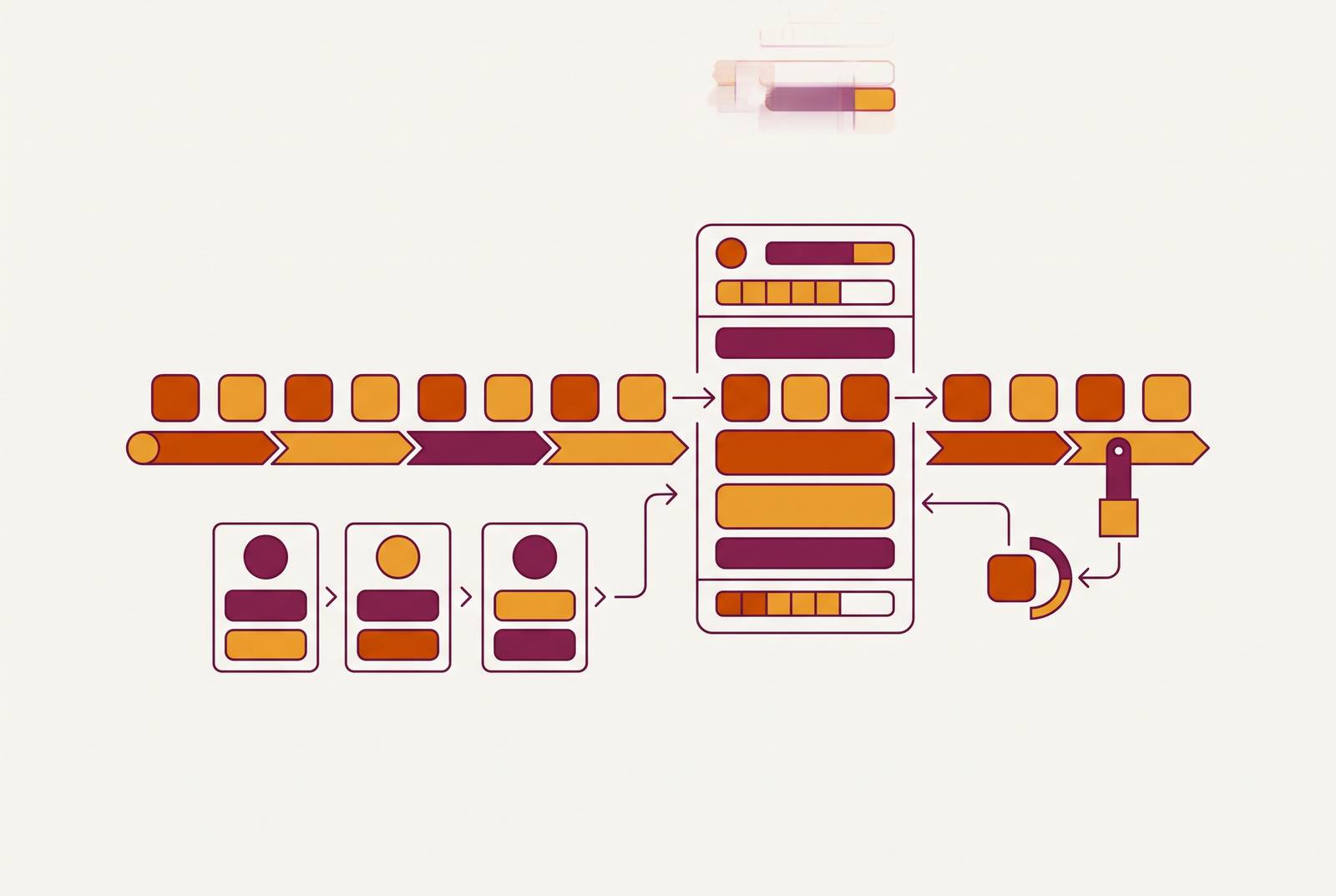
Evaluating billing infrastructure for late-arriving events tests whether a vendor can turn distributed usage into a defensible invoice. Grace windows alone are not enough. The strongest platforms combine timestamp correctness, raw event retention, controlled period close, deduplication, and reconciliation, making late-event handling a high-signal test of whether a system was designed for usage billing.
Why distributed systems make late-arriving billing events structurally unavoidable
Network partitions, retry storms, and asynchronous processing cause a gap between when usage occurs and when a billing platform gets its record. An event timestamped at the final second of a billing period may arrive tens of minutes or hours later. A well-run engineering team can reduce delivery delays, but it cannot make distributed services complete and report their work in a single, guaranteed order.
The system must decide where delayed usage belongs even when every service has worked as designed. Retries add another complication because the same event may reach ingestion more than once. To bill correctly, the system must keep track of when an event occurred and whether it has already been counted.
As more companies across B2B SaaS use usage-based pricing, they face these same constraints. Their exposure comes from the architecture. Companies should check a vendor's policy on delayed delivery before they buy, without waiting for the first disputed invoice.
The five vendor policies that determine whether late events are handled correctly or silently dropped
The first policy is the grace window, which defines how long a completed billing cycle continues accepting late usage. Its duration should be configurable. Real-time quota enforcement usually needs a short window of minutes, but invoice finalization can need many hours or more. A vendor must explain which workload its advertised window serves and where the operator controls that choice.
The second policy is effective-timestamp billing, which assigns usage to the period in which it occurred. Arrival time is not consumption time. Using ingestion time can produce an apparently complete invoice while assigning charges to the wrong cycle. The distinction becomes visible when a customer challenges the period attribution or reconciliation exposes the mismatch.
The third policy concerns period reopening and finalization. A vendor should distinguish changes to a draft period from corrections after an invoice has closed. The finalization sequence should stop accepting events into the period, recalculate from raw events, and snapshot every price and meter used. Later arrivals should follow a written correction policy, such as credit notes or adding them to the next cycle, while leaving the closed record unchanged.
The fourth policy is deduplication before aggregation. Retries, network redelivery, and queue reprocessing make repeated delivery routine. Deterministic idempotency keys derived at the source from request ID and event type, rather than random UUIDs, allow a time-windowed set of seen keys to reject duplicates before rating. Downstream deduplication takes place after the duplicate has already been counted in the calculation.
The fifth policy is independent reconciliation of the event counts at the source, in the pipeline, and in the bill. Each boundary needs its own comparison. A source-to-pipeline gap shows that events were lost in the pipeline, while a pipeline-to-billed gap shows a rating logic error. Both must be detectable and alertable, because successful ingestion alone does not establish that usage reached an invoice.
How raw event storage versus pre-aggregation determines whether late events can be recovered at all
These policies depend on what the platform retains. Raw event storage preserves the source record needed to insert a delayed event and recalculate its period exactly. It also supports full replay when a rating error is discovered. The tradeoff for retaining the source record is higher read cost.
Pre-aggregation makes the opposite tradeoff when hourly or daily rollups replace raw records. Reads become cheaper, while billing accuracy becomes approximate and reprocessing becomes lossy. A late event arriving after a rollup closes requires that rollup to run again, which may no longer be possible. Once the underlying events have been discarded, the platform cannot reconstruct the period from source truth.
A hybrid design retains raw events while using rollups to make reads cheaper. The rollup serves as an optimization, while raw events remain the authority. This approach preserves exact accuracy and full replay at a medium cost relative to raw-only and rollup-only storage. It also keeps past usage so the system can make retroactive pricing corrections, which aggregated counters alone cannot support.
The consequence for finalization is direct. Even with a grace window, the closing calculation needs to recalculate from raw events.
Where quota enforcement and invoice finalization must be kept architecturally separate
Quota enforcement answers whether a customer can keep consuming now, while invoice finalization establishes what the customer owes for a completed period. Those questions have different timing requirements. Quotas must update within milliseconds, typically through in-memory counters such as Redis, and tolerate approximate consistency. A slightly stale count can permit a temporary overage without making that count suitable for invoicing.
Invoice finalization requires an exact calculation after the allowed late-arrival window. It must absorb delayed usage before producing an amount that can be defended to customers and auditors. That calculation cannot rely on the running counter used to enforce access.
Combining both workloads in one aggregation pipeline forces a conflict. Extending the shared window to capture delayed invoice usage undermines timely quota enforcement, while tightening it for quotas can close the invoice before all eligible usage arrives. One configuration cannot satisfy both consistency requirements.
The appropriate architecture uses a fast, approximate counter for enforcement and a separate, exact, raw-event-backed system for finalization. For a buyer, the practical question is whether these are genuinely separate systems. A claim of “real-time billing” does not answer it.
What a narrow or non-configurable grace window costs in practice
A narrow grace window leads to revenue leakage when valid usage arrives too late to fall within the window. The event may have been missed at ingestion, arrived after the cutoff, or been counted as an overage without ever reaching an invoice. These failures need not produce an error.
A fixed window also transfers responsibility to the buyer. If the platform cannot accommodate the actual delay pattern, the team must reconcile manually each month or accept systematic undercharging. An undocumented window makes evaluation harder because the operator cannot establish which late arrivals remain eligible.
Usage assigned to the wrong period or silently omitted creates discrepancies between billed amounts and recognized revenue, while silent edits after finalization change the record without a documented correction. Both are relevant to ASC 606 and IFRS 15 exposure. Period-close policy consequently needs to be understood by finance as well as engineering, even when its controls sit inside the ingestion and rating systems.
The questions that separate purpose-built metering platforms from subscription tools that added usage as an afterthought
A rigorous vendor conversation should turn the architecture into seven specific questions. “What is your grace window for late-arriving events, and is it configurable per billing period or per customer?” establishes whether cutoff behavior is an operator policy. “Do you bill on effective timestamp or ingestion timestamp?” establishes the rule for period attribution. Neither answer should require the buyer to infer behavior from a general feature description.
“Do you retain raw events after aggregation, or do you discard them once you've built rollups?” tests whether correction remains possible. “Are your quota enforcement and invoice finalization pipelines the same system or separate?” tests whether the design accommodates both latency and accuracy requirements. A configurable interface cannot restore source records that the underlying system has discarded.
“What happens to an event that arrives after finalization — is it a credit note, carried to the next period, or silently dropped?” tests whether period close has an explicit correction path. “Do you deduplicate at ingestion, before aggregation, or downstream?” locates duplicate protection relative to rating.
“What throughput can your event ingestion handle, and at what latency?” completes the interrogation. The answer should distinguish a standard API from a high-volume, session-token-based stream where relevant to the workload. Speed does not repair incorrect timestamp attribution. API and SDK quality also reveal how much integration machinery the engineering team will still need to build, even after buying the platform.
Why AI and multi-agent products raise the stakes on every one of these criteria
AI products amplify the same constraints through greater event volume, more varied usage, and more pricing dimensions. A workflow spanning an orchestrating agent, a retrieval agent, an action agent, and a verification agent produces distinct billable events at different latencies. Completion is not synchronized with the user-facing response. A verification step may report its usage seconds or minutes after the orchestrating event has been logged, increasing the frequency of delayed arrivals relative to synchronous API products.
That pattern makes throughput and timestamp correctness inseparable in evaluation. Fast ingestion must accept bursty streams without confusing receipt order with consumption time. Raw retention must keep enough history to recalculate exactly, and deduplication must keep repeated delivery from changing the results of rating. None of these is a new criterion, but each has more opportunities to fail as workflows spread across agents and steps.
Prepaid credit wallets add a related reconciliation obligation. A late event that reduces a balance after nominal period close must either change the earlier balance correctly or carry forward with a clear record in the accounts. Discarding it leaves credits unreconciled and revenue unbilled. The wallet therefore needs the same explicit treatment of late usage as the invoice.
Enterprise procurement adds pressure for traceable consumption records. Where an agentic workflow governance framework is contractual, the platform must provide a per-agent, per-step audit trail.
How to use late-event handling as a build-versus-buy forcing function
Late-event handling concentrates the difficult parts of billing into a single evaluation problem. Event ingestion and invoice generation can look straightforward during planning, while idempotency, timestamp correctness, grace windows, raw retention, and reconciliation consume quarters in implementation. The problem also intersects with proration, credit rollover, and multi-currency handling. Building the initial path from event to invoice is not the same as owning its correctness over time.
The lesson for a team evaluating its options is to assess the cost of maintaining these policies together, rather than comparing an ingestion endpoint with a vendor subscription. Each policy depends on the others. A replayable event log, for example, only supports a defensible correction when timestamp attribution and period-close rules remain explicit.
Building is justified when billing infrastructure is itself the product, as it is for payments companies and billing vendors developing core intellectual property. Strict data residency requirements that rule out all cloud-hosted platforms can also justify an internal system. Those are substantive exceptions. For teams whose core product lies elsewhere, perpetual ownership of late-event correctness is usually a maintenance burden.
The corresponding buying case is for purpose-built metering and billing infrastructure with grace windows, effective-timestamp rating, raw retention, deduplication, and reconciliation designed into the system. On-premises deployment should also be available where residency requirements disqualify hosted options. The decisive distinction is whether delayed usage is handled by the platform’s underlying architecture or left for the buyer to repair after each billing cycle.