Vendor SLA Definitions for Billing Accuracy and Uptime in Enterprise Contracts
Vendors control billing SLAs—here's what to demand in your contract.
Enterprise billing SLAs define much more than uptime. Their definitions, exclusions, and remedies determine who absorbs the cost when service fails or consumption records become unreliable. Standard vendor terms do more to protect what the vendor earns than how the buyer’s business runs. For AI and usage-based products, buyers need clear promises of billing accuracy and metering continuity, backed by infrastructure that can prove whether the vendor kept those promises.
Why enterprise billing SLAs are written to protect vendors, not buyers
Enterprise SLAs begin as vendor legal templates. Vendors write the terms, while buyers seek changes to a finished document whose definitions and exclusions already limit liability. That starting position shapes every subsequent discussion. The vendor controls the measurement methodology, the exclusion list, and the credit calculation unless the buyer negotiates changes.
The resulting protection can be narrower than it appears. A service interruption may fall outside the downtime definition, and a qualifying breach may produce credits far below its business impact. The vendor keeps the contract revenue and pays back only a small share through the remedy. For conventional SaaS, that gap concerns access to a service. For usage-based and AI products, it also concerns the production infrastructure that records consumption and determines what customers owe.
What "99.9% uptime" actually permits, and what it excludes
An uptime commitment below full availability permits downtime by design. Moving to four-nines availability reduces the allowable downtime by a factor approaching ten, a significant difference for financial systems and AI inference pipelines where consumption charges accrue in real time. Yet the percentage answers only part of the question. The contract must first determine which interruptions enter the calculation.
Cloudflare’s Enterprise Customer Support and Service Level Agreement illustrates how definitions divide the commitment. It distinguishes “Incident,” “Issue,” “Unscheduled Service Outage,” and “Customer Planned Downtime,” with each term governing a different part of the agreement. Distinguishing an observable degradation from a failure to meet a service level is a reading lesson.
Exclusions then narrow the set of qualifying interruptions further. Standard categories include scheduled maintenance, customer-caused issues, third-party integration failures, beta or preview features, and force majeure. Customer attribution is especially consequential when the vendor can determine it unilaterally. Several hours of actual unavailability can therefore produce no contractual breach if enough of the interruption falls within maintenance windows or other exclusions. Experienced availability and contractual uptime measure different things.
How credit structures cap the financial consequence of a breach at a level vendors can absorb
Even when an interruption qualifies, service credits are generally tied to the vendor’s monthly fee. Caps set at a fraction of that fee limit the remedy before the business impact is considered. Sustained downtime in a Tier 1 SaaS service can cause damage many times the monthly charge. The credit formula bounds the vendor’s financial exposure.
The form of payment adds another restriction. Buyers have to keep using the service to get the benefit of future service credits, even when repeated failures give them reason to leave. A discount on continued service is not equivalent to a cash refund. A larger credit still leaves the buyer locked into the contract. Without an exit trigger, chronic underperformance can leave the buyer waiting for the term to expire.
The negotiating response is to change both the amount and the usability of the remedy. Buyer-favorable terms use multi-tier escalating credits tied to breach severity, a cap above the monthly fee or no cap, and the option to receive cash. They also provide termination rights for sustained or material breach. These are distinct protections.
Why billing accuracy is absent from most vendor SLAs, and why that gap is widest for usage-based products
Standard uptime language governs accessibility, leaving billing accuracy outside the commitment unless the contract expressly includes it. A service can be fully available while its metering pipeline miscounts tokens, underbills GPU-minutes, double-counts API calls, or attributes usage to the wrong billing period. Those errors may leave the buyer with no uptime credit. Availability does not establish that an invoice is correct.
People who build usage-based systems aim for invoice-to-meter variance under 0.5%, while tracking revenue leakage, gross margin per billable unit, and billing-dispute tickets to gauge how often bills surprise customers. Those controls bind the vendor only if they are written into the agreement. Undercounting erodes revenue, while overcharging creates disputes, and both can remain small enough to escape attention in monthly reviews.
HappyRobot’s official pricing documentation describes usage billed by the minute, while its comparison pages describe enterprise pricing as “scoped per use case.” Those distinctions prevent a generic per-call assumption from standing in for the actual billing model. More broadly, when the billable event is a completed task or outcome, both parties must agree on what completion means. Without that methodology and an accuracy threshold, the SLA gives the buyer no set basis for claiming back metering losses.
How metering continuity during downtime creates a compounding risk unique to consumption-based billing
A metering interruption can damage the record of consumption even when the underlying customer workload continues. Inference jobs may run, API calls may be processed, and prepaid credits may be used up while the billing pipeline is down. The resulting usage may be lost, double-counted, or assigned to the wrong period. Getting access back does not by itself fix that record. A credit for unavailable service addresses a different loss.
Metering continuity therefore needs its own contractual treatment. Usage ingestion typically operates at low latency measured in seconds, and a gap in ingestion is a gap in the revenue record. Late-arriving events, event replay, and retroactive corrections are the means of repairing that gap. Their contractual significance depends on whether the SLA requires accurate records across interruptions.
Under ASC 606, prepaid credits are deferred revenue until they are used, so usage must be put in the correct accounting period. Timestamp cutoff errors can therefore become revenue-recognition errors. Hybrid pricing compounds the problem when subscriptions billed in advance, usage billed in arrears, prepaid drawdowns, and mid-cycle proration coexist. A single interruption can affect several billing streams, leaving the buyer with reconciliation work that a percentage-of-fee credit does not cover.
The specific clauses that determine whether a billing SLA has real teeth
The downtime definition is the first clause to examine. A measurement at the network layer can show that the service is up while the billing subsystem fails. Buyer-favorable language identifies the API or event ingestion endpoint as the measurement point and counts degraded metering throughput as a partial outage.
The exclusion clause determines which failures disappear from that measurement. Vendor-default language may exclude maintenance broadly or allow unilateral customer attribution. Terms that favor buyers require enough advance notice to be useful, a monthly cap on maintenance hours that can be excluded, and no maintenance during peak consumption windows. Customer-caused exclusions should require demonstrated causation. That distinction places the burden on evidence.
A fractional monthly-fee cap and future-service-only credits constrain recovery even after a breach is established. Stronger language specifies severity-based escalation, a cap above the monthly fee, and a cash-refund option. Each element changes a different part of recovery.
Contracts often have no billing accuracy clause at all. Internal accuracy goals do not substitute for a contractual variance threshold, reconciliation frequency, and remedy. For AI or outcome-based pricing, the clause also needs an agreed definition of a completed, billable event. Otherwise, the parties can dispute the denominator before discussing the error.
The exit clause lets the buyer leave after repeated failures, adding to what credits can do. Without it, the buyer’s main leverage is whether to renew. Terms that favor buyers allow termination for sustained or material breach, set the cure period, and give the buyer a cash refund of prepaid fees. That protection should cover sustained billing accuracy failure as well as uptime breaches.
How to negotiate billing accuracy and metering continuity into a contract that was not designed to include them
Negotiation starts with infrastructure eligibility, before detailed clause revisions. Buyers with data residency requirements should confirm that the vendor supports the required on-premises or sovereign cloud deployment. They should also confirm real-time usage dashboards and in-flight spend alerts as contractual deliverables. These provide the buyer’s verification layer alongside an accuracy commitment. When buyers cannot see their consumption, they have a harder time challenging billing errors before those errors turn into disputes.
Commercial timing comes next. Buyers have the strongest leverage before signing a new contract or committing at renewal, while later modifications require vendor consent. The accuracy request is best framed as risk allocation. Asking the vendor to disclose its internal invoice-to-meter variance target makes that discussion concrete. Where a target exists, the proposed commitment formalizes a standard the vendor already claims to meet.
The first substantive request should be a billing accuracy schedule defining the variance threshold, reconciliation frequency, and remedy. For outcome-based pricing, agreement on the billable-event methodology must precede pricing going live. That establishes what the accuracy calculation measures. The next request should bring metering pipeline degradation into the downtime definition, followed by a monthly cap on maintenance exclusions and advance notice longer than the vendor default.
Only after those obligations are defined should the negotiation turn to multi-tier credits, a cap above the monthly fee, and cash refunds. Otherwise, the parties are putting a price on a breach before they have agreed on what it covers. The final request should add an exit trigger for repeated variance above the agreed threshold within a defined rolling period, together with the uptime breach trigger. A defined cure period and prepaid-fee refund complete the termination mechanism. This sequence makes remedies follow measurable duties.
What a well-constructed billing SLA actually looks like in practice, and the infrastructure requirements behind it
A well-constructed agreement connects service availability, accurate consumption records, and enforceable recovery. Its uptime measurement includes the relevant endpoint, while its accuracy schedule defines allowable variance, reconciliation, and billable-event methodology. Escalating credits can be taken as cash, and sustained failures in either uptime or accuracy can trigger termination after a defined cure period. Customer-facing usage visibility is a contractual deliverable. None of these commitments depends on a future roadmap item.
The infrastructure must then meet those obligations both during interruptions and when the service runs as usual. Sub-second event ingestion with documented throughput SLAs supports timely consumption records. Idempotent event APIs with deduplication by event ID prevent retries from counting the same usage twice. Configurable aggregation windows, late-event handling, and retroactive corrections allow the record to be reconciled without assigning consumption to the wrong accounting period.
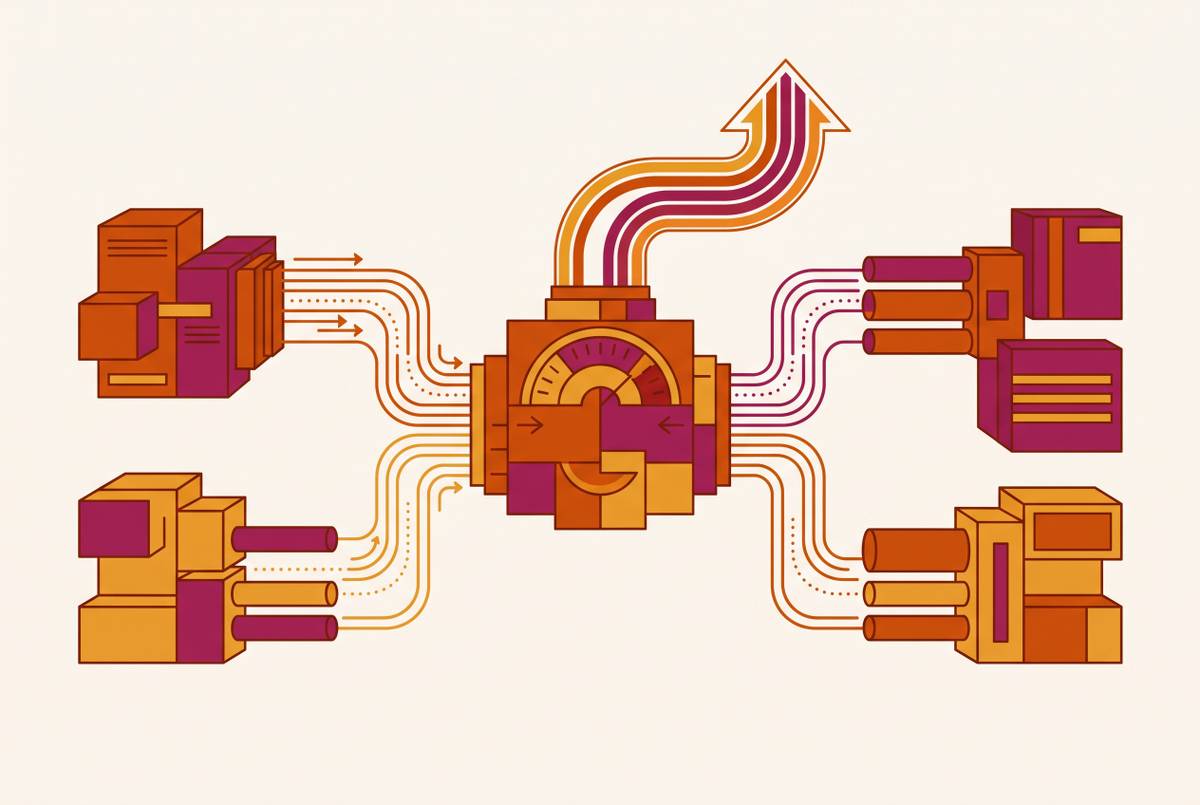
The metering-to-invoice boundary is another source of risk. A homegrown metering pipeline feeding a separate billing system leaves the engineering team responsible for maintaining and debugging the integration. Two systems create separate logs and reconciliation processes, complicating an accuracy dispute when neither provides a single source of truth. A platform built for this work can ingest events, model pricing dimensions, and create invoices in one engine. That architecture supports the commitment without making the contract depend on reconciliation across a separate metering-to-billing integration.
Buyers should ask vendors to explain their metering-to-invoice architecture and whether timestamped event logs, aggregation records, and invoice-to-meter reconciliation reports are produced automatically or require manual extraction. Required deployment support must be established as well. Contract language can allocate responsibility, but it cannot manufacture missing records. Billing infrastructure is the foundation that makes an accuracy commitment provable and its remedy enforceable.