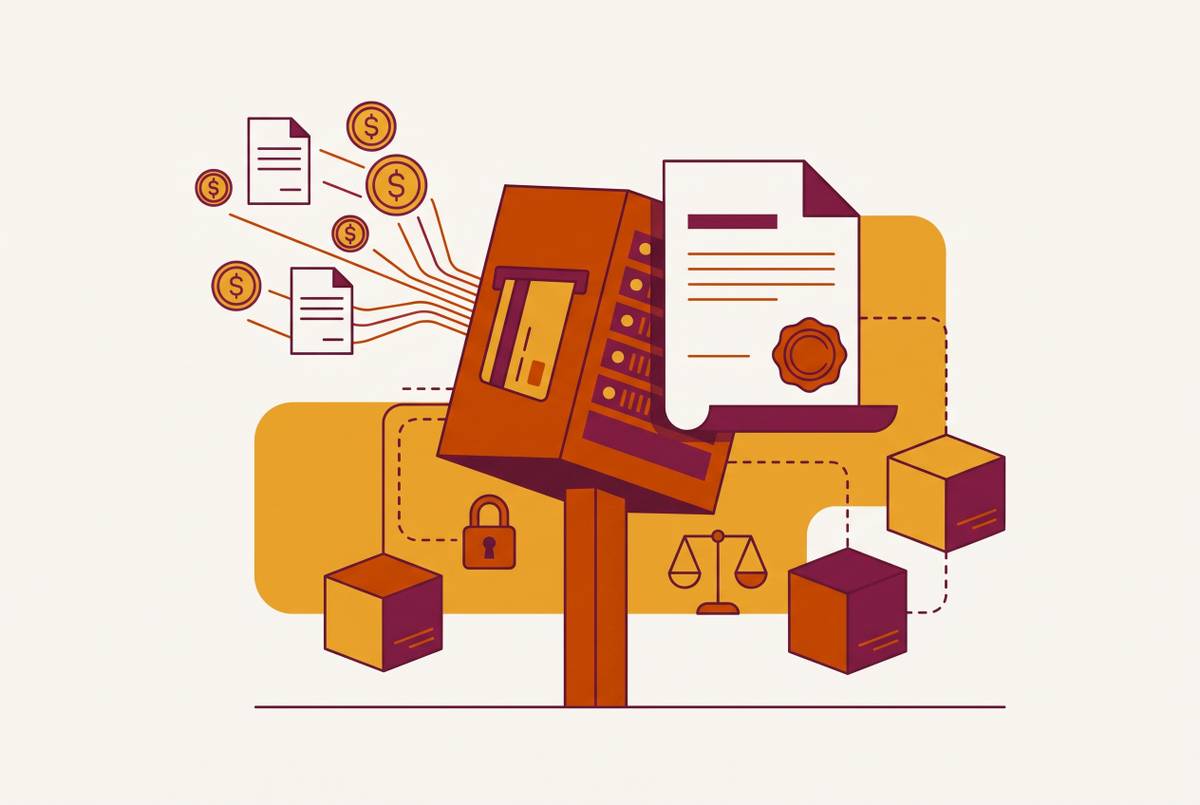
Internal SLAs Between Engineering and Finance for Billing System Reliability
Revenue depends on event accuracy and timing, not just system uptime.
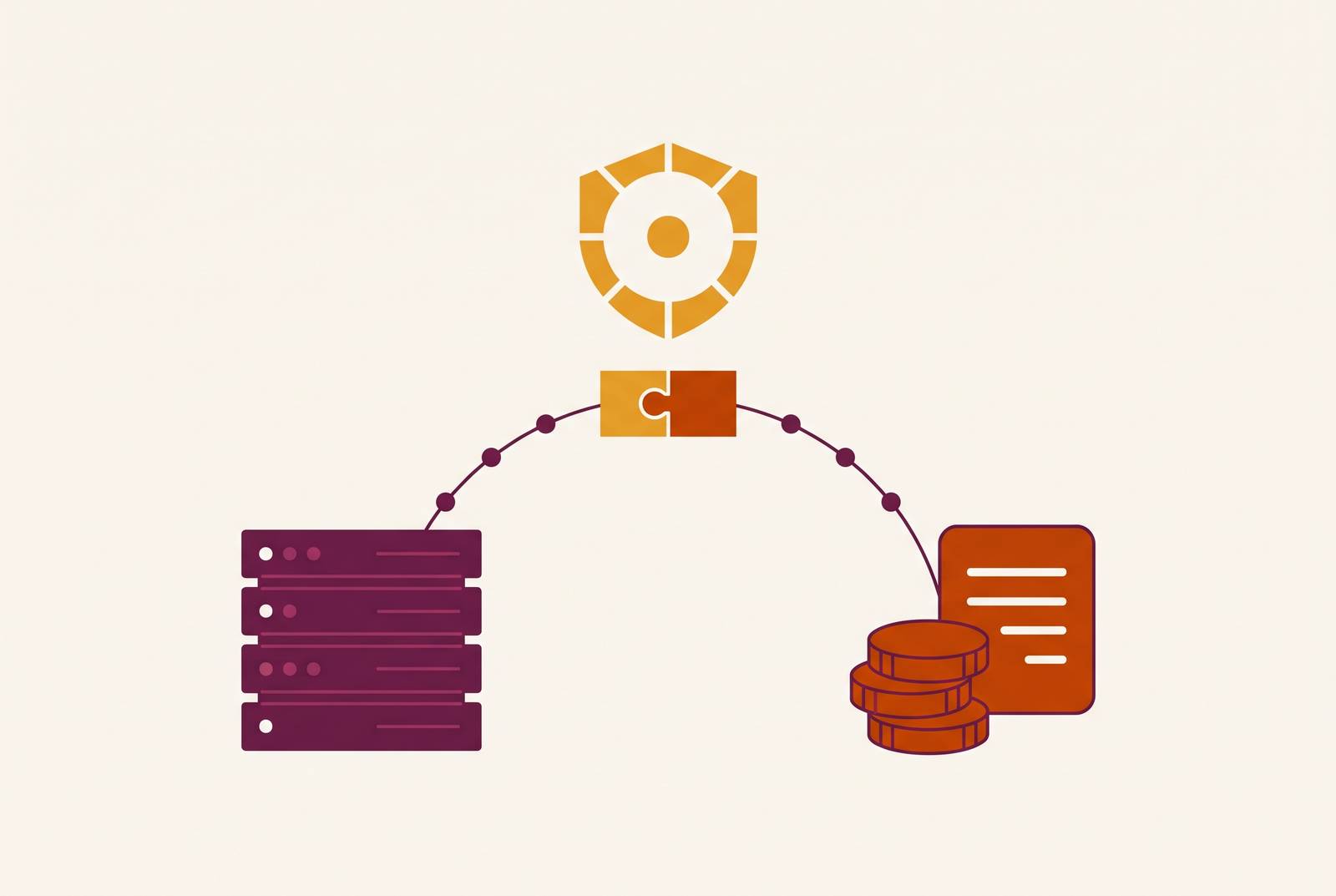
Billing reliability requires more than a reachable service when every token, API call, and GPU-minute affects revenue. Internal SLAs between engineering and finance must define reciprocal commitments for event ingestion latency, invoice accuracy, and reconciliation windows. The standard is a shared revenue outcome, supported by obligations and infrastructure that make it measurable.
Why uptime alone fails when billing must count every billable event
A billing pipeline can pass every uptime check while losing events between ingestion and aggregation. Its service responds, but its invoices omit consumption. A delayed event causes a similar failure: recorded usage falls behind actual usage even though availability stays the same.
Flat-subscription billing assumes that a system is reliable if it can be reached. Hybrid and usage-based pricing break that assumption because consumption determines the financial record. A missed or late event becomes both a software defect and a financial discrepancy. Availability percentage, MTTR, and MTTA remain useful operational measures, but they do not establish whether the system counted correctly. For consumption billing, reliability also means keeping intact the events that become charges and recognized revenue.
The three billing reliability dimensions uptime metrics do not capture
Event ingestion latency measures the gap between consumption and its recorded arrival in the billing pipeline. Timing is part of the financial record. At AI inference volumes, where token generation and API calls happen at millisecond speeds, even a 30-second lag can produce disputes and potential under-billing. Ingestion, aggregation, and rate application are separate streaming stages, and each can fail in its own way. Treating them as one billing service obscures where the delay occurred.
Traceability makes it possible to find the cause of that delay. A correlation ID ties a usage event to its originating request, session, or agent run, making it possible to connect an invoice line item to application logs. Without that link, latency failures can go unseen until a customer disputes an invoice.
Invoice accuracy measures how well charges and recognized revenue match actual consumption. Under ASC 606, prepaid credits remain deferred revenue until consumed, while pay-as-you-go revenue is recognized in the period usage occurs. Minimum-commit-plus-overage structures split recognition between ratable and consumption-based buckets. The distinction changes what an error affects. Recording a purchased block of credits entirely as revenue misstates that treatment, and a metering error can conceal the discrepancy until close.
The reconciliation window measures how long finance must wait to close and verify usage after it occurs. It is a joint dependency for engineering and finance. If aggregated usage arrives days after the period ends, finance cannot close on schedule. Together, latency, accuracy, and the reconciliation window describe different aspects of billing reliability, namely when data arrives, whether it is correct, and when it can be verified.
Why engineering and finance currently own different halves of the same reliability problem
Engineering sees ingestion rates, queue depths, aggregation lag, and error rates. Finance sees the charges, the recognized revenue, and the results of reconciliation. Neither view establishes the complete revenue consequence of a pipeline failure. Per-customer assessment requires joining incident timestamps, tenant usage logs, customer contract terms, and revenue data. Those records sit across observability tools, application databases, CRM, and finance systems that were not built to provide a shared reliability picture.
The ownership gap also appears in reciprocal obligations. Stampli’s AP SLA framework identifies a one-directional failure in which AP faces processing deadlines while approvers have no turnaround obligation, leaving AP blamed for delays it cannot control. Billing has a similar asymmetry when engineering is accountable for uptime but finance has no committed window for reporting discrepancies or closing usage periods. Engineering then cannot tell whether a silent error was caught. Finance, meanwhile, cannot see the upstream degradation that led to its numbers.
The vocabulary reinforces this division of responsibility. Engineering discusses uptime, MTTR, and error budgets, while finance discusses close cycles, deferred revenue, and reconciliation variance. These terms describe the same system from different positions, but neither vocabulary alone covers all three reliability dimensions. Without a shared contract, each team can meet its local standard while the joint outcome remains unowned.
What a well-formed internal SLA between engineering and finance actually covers
The internal SLA should define a two-sided billing commitment rather than an uptime guarantee with financial penalties attached. Its terms must distinguish the promise from the target and the measurement. The SLA records what both teams promise, the SLO provides a tighter internal engineering target, and the SLI supplies the raw signal, such as pipeline lag, invoice error rate, or reconciliation close time. The Google SRE Book recommends a tighter internal SLO to provide room to respond before an external commitment is breached. Used within the company, that buffer gives engineering time to fill gaps in usage data before finance’s agreed window is at risk.
Engineering’s commitments should begin with a maximum elapsed time from a billable event occurring to its confirmed entry into the aggregation layer. The agreement should express that limit as a percentile, such as P99, over the billing period. Completeness needs a separate commitment from latency. All events from a closed billing period should be ingested before the finance reconciliation window opens. A percentile latency measure cannot substitute for that data-completeness obligation.
The agreement should also specify how quickly engineering notifies finance after detecting a metering failure. That gives finance time to flag the affected period before close. Correlation ID coverage should make every invoice line item traceable to its source events so finance can independently assess accuracy. Each supports the path from recorded consumption to a verifiable charge.
Finance should commit to a maximum discrepancy-reporting window after usage data arrives and a deadline to confirm period-end reconciliation. Engineering then knows whether errors have been reported and when a period is closed and safe to archive. Finance should also supply current customer contract terms on a defined cadence, including credit balances, commit thresholds, and overage rates. The rate engine needs both usage and current terms to produce an accurate invoice.
Operational Level Agreements should define the handoff between pipeline completion and finance review. Each OLA should state who delivers the data, its format, the delivery deadline, and who confirms receipt. Finally, the SLA should include a minimum processing throughput in events per second under peak end-of-month load, plus an agreed error budget for failures, late events, or invoice variances. That budget gives both teams a shared signal for prioritizing reliability work over feature delivery.
How to set the right thresholds for each billing SLA commitment
The current pipeline’s P99 under normal load provides the baseline for an ingestion limit, with a tightening schedule agreed as automation matures. An aspirational target repeatedly missed and left unenforced weakens accountability. Stampli’s guidance similarly recommends using the organization’s own baseline. The billing system must consistently deliver under the conditions its commitments cover.
Those conditions include volume and pricing complexity. A pipeline serving a few hundred enterprise customers has different reconciliation constraints from one ingesting millions of AI inference events per hour. Normal-load latency also does not establish peak-close throughput. A commitment calibrated only to ordinary traffic leaves the busiest period unaccounted for. Thresholds should fit the system’s actual volume tier and the lowest peak-load performance that the agreement allows.
The error budget should separate accepted operating variance from a breach requiring escalation. It is not a promise of zero failure. Both teams should agree on the rate of late events or invoice variances allowed per period, and engineering’s completeness SLO should leave time before the reconciliation window opens. Setting that internal target at the handoff deadline removes the recovery buffer. The agreement would then leave no time to resolve a pipeline incident before finance needs the data.
Accuracy thresholds also need to reflect how charges are calculated. Billing across tokens, GPU-minutes, audio minutes, and hardware tiers creates more opportunities for rate-card misapplication than a single-dimension usage model, warranting tighter variance tolerance. Prepaid credit drawdowns need a distinct threshold from postpaid invoice accuracy. Cash arrives before revenue is recognized, and an error that over-credits a wallet is not corrected at invoice time in the way an overage error might be.
Making the SLA enforceable through dashboards, escalation paths, and joint reviews
A shared dashboard should expose pipeline lag, ingestion completeness, invoice variance rate, and reconciliation close status in real time. Neither team should depend on requests to the other for those signals. Finance needs to see whether current-period events are on track for the reconciliation window, while engineering needs to see reported discrepancies before the close deadline. Breaking cycle time into ingestion, aggregation, rate application, invoice generation, and finance review attributes delay to its actual stage.
This visibility need not be built from scratch. Platforms purpose-built for metered usage should surface these signals natively, connecting real-time consumption data with finance’s reconciliation work. Teams still assembling that picture in spreadsheets absorb a manual cost that billing infrastructure could eliminate.
Alerts should act before commitments are breached. Aging alerts should flag pipeline lag as it nears its limit, while automated escalation should spot reconciliation windows at risk and tell finance within the agreed incident window. Escalation must run in both directions. An engineering latency SLO miss should reach engineering leadership with finance notified, while a missed finance discrepancy-reporting window should reach finance leadership with engineering notified.
Joint reviews should cover what failed and how that failure affected revenue. A dropped batch, rate-card misapplication, or close completed with unresolved variance requires participation from engineering and finance. A monthly review should check whether each stage met its commitments as well as how the system did as a whole. That cadence gives both teams a basis for revising thresholds as automation improves and identifying where the agreed handoff is failing.
What billing infrastructure must support for these SLAs to be achievable
The SLA requires infrastructure designed for metered usage, including millisecond-speed ingestion, immutable audit trails, real-time usage visibility, and flexible rate-card modeling. A streaming pipeline must separately capture events, aggregate them by customer and period, and apply pricing. Each stage needs independent observability for breach attribution. Correlation IDs must preserve the connection to originating requests so invoice accuracy remains auditable without manual reconstruction.
The pricing engine needs to model combinations of usage dimensions, prepaid credits, and postpaid overages without custom engineering for every new configuration. Credit balances and drawdown events need first-class representation because deferred revenue recognition depends on wallet-level accuracy. Finance also needs to get period-end usage data directly. A reconciliation deadline is not achievable if access depends on engineering finding time to run a report.
These requirements should guide the choice to build or buy. An in-house system creates an ongoing maintenance obligation as pricing dimensions and enterprise contract structures change, with security updates, compliance changes, and new pricing support competing with feature delivery. A purpose-built platform should handle building and patching metering so engineering can configure and monitor it. Splitting metering and billing across two vendors creates a handoff where SLA accountability can fall between systems. When choosing a platform, teams should check the full consumption-to-invoice path as well as what each component can do.
Deployment constraints change the infrastructure answer while preserving the commitment: on-premises and sovereign cloud systems still need the same traceability and completeness, and finance must still get the data on time. When data residency requires the system to run in the customer’s environment, the infrastructure must let it run there and keep those controls in place. The enabling requirement is a billing system that makes every stage observable and every financial handoff verifiable, so engineering and finance can keep the same promise.